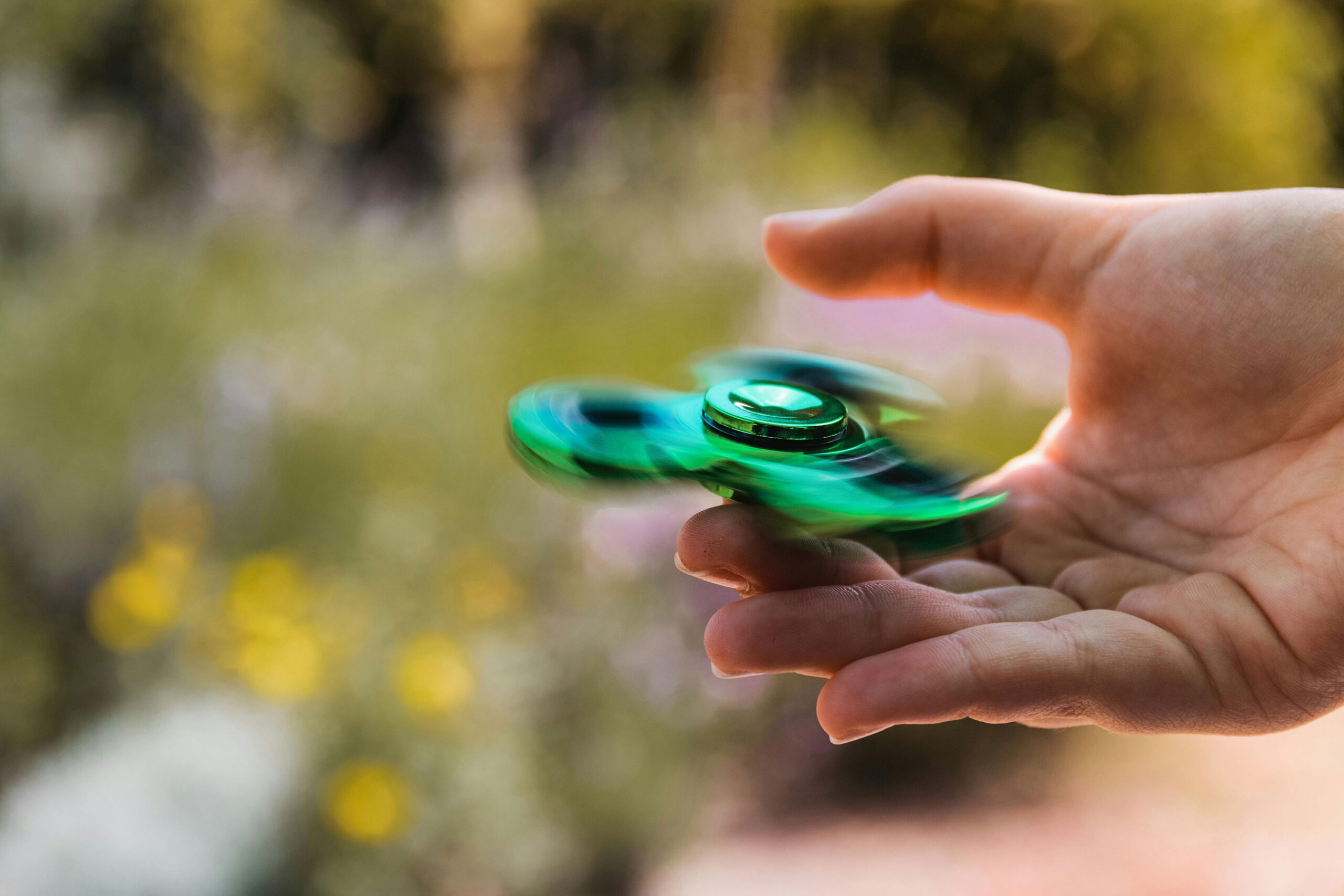

When my son was younger, he was diagnosed with ADHD almost immediately by our primary care doctor. He had a hard time sitting still in her office, and his answers to the questions she asked were often all over the place. Shortly after that, we took him to see a counselor for an unrelated concern, and she asked which parent had ADHD, since it was hereditary. Though neither my husband nor I had been diagnosed, we both just sort-of assumed it was my husband. When it comes to sitting still, he is quite bad at it, whereas I can sit for hours.
Spoiler alert: It was not my husband. But if you’ve been reading my blog or know me at all, by now you know this.
At my first therapy session with my current therapist, when I told her I had been diagnosed as autistic, she responded with, “And ADHD, too, right?” I reassured her that hahaha, no silly, I was the farthest thing from ADHD. She just nodded politely and encouraged me to do a little more research. In her experience, many people with late-diagnosed autism also had ADHD, and I definitely exhibited some symptoms she recognized.
Fine, I thought, I’ll pick up a book on ADHD. Sure, I’ve read some before for my son, but those were specifically addressing ADHD in children. What’s the worst that happens? I learn some stuff that helps my son when he eventually becomes an adult.
What did I actually learn, though? Oh shit – I think I have ADHD.
Probably one of the most mistaken symptoms of ADHD is the idea of “attention-deficit” – it’s in the name, after all. And what person hasn’t heard a squirrel joke in relation to ADHD? (You know what I’m talking about: I was just trying to explain – oh hey, squirrel!) And some folks with ADHD absolutely struggle with being able to focus their attention. On the other hand, another way ADHD can show up is as hyper-focus of your attention. It is less a deficit in attention and more an inability to regulate your attention.
When our son was a baby, my partner was often confused why I wasn’t able to watch him and do other things around the house like he did. Why couldn’t I cook or clean up at the same time I was watching our kid? He could easily do that. But for me, I could focus on either our son or making food or picking up the house. Naturally, I chose focusing on our son, but to the detriment of all else. I just can’t manage to do multiple things at the same time because I lack the ability to tune in just a little to each one instead of all the way.
It can be hard to parse out some of the other symptoms of ADHD from those of my autism since I have both, and there is definitely some overlap. Special interests? I have those in spades. Issues with executive functioning? I have a bit of that, as well. Social interaction challenges (like info-dumping)? Check, check, and check.
But also, while the autistic side of me enjoys predictability, I also absolutely crave new experiences, love to travel, and thrive when there is change in my environment. While I am known to dig in deep on a special interest (autism), I also have several different ones I like to rotate between (ADHD). While I like to be in charge of my daily schedule (autism), I also have no issues switching it up as long as I’m the one in control of it (ADHD). I can make meticulous lists to prepare for things (autism), and I also will consistently need to run back in the house because I forgot one (or two or three) things I meant to bring with me (ADHD).
I am still working on understanding my ADHD and how it intersects with my autism. Believe it or not, it’s been easier to find information about late-diagnosed autism than ADHD, though that landscape is rapidly changing. And new research around both autism and ADHD has been making some great strides (and may still, as long as it’s outside the U.S. Sigh). Still, understanding even a little about this has made a huge difference in how I’m able to approach my life and work – as a late-diagnosed autistic and person with ADHD.